
Selecting the right electrical contractor for commercial and industrial projects is a decision that can significantly impact the success, safety, and efficiency of any property development or renovation. Unlike residential work, commercial and industrial electrical projects involve complex systems, high-capacity power distribution, and stringent regulatory requirements. From data networks and advanced lighting systems to HVAC equipment and heavy machinery, these installations demand a level of expertise and precision that only qualified professionals can provide. Choosing the right contractor is about more than cost—it is about ensuring quality workmanship, regulatory compliance, and long-term operational reliability.
Commercial and industrial projects often feature electrical systems that are far more intricate than typical home installations. They include three-phase power systems, high-voltage equipment, specialized lighting, large-scale HVAC, and critical infrastructure such as emergency backup systems or manufacturing machinery. Each of these components must be designed, installed, and tested with precision to ensure safety, efficiency, and uninterrupted operation. Skilled Electrical Contractors Jacksonville NC bring specialized knowledge and experience to handle the technical demands of such projects, reducing the risk of costly mistakes or system failures.
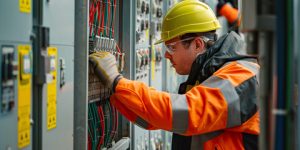
One of the first considerations when choosing an electrical contractor is licensure and certification. Electrical work is highly regulated to protect property, personnel, and the public. Licensed contractors have met rigorous training and testing requirements, ensuring they understand national and local electrical codes, safety standards, and best practices. In commercial and industrial projects, licensure demonstrates that the contractor has the technical expertise to manage complex wiring, high-capacity panels, and large-scale installations. This assurance is crucial because code violations or substandard work can lead to safety hazards, fines, and delays.
Experience is another critical factor. Contractors who specialize in commercial and industrial projects have encountered a wide range of scenarios, from office complexes and retail centers to manufacturing facilities and warehouses. Experienced contractors understand how to plan for high-load demands, integrate modern technologies, and manage project timelines efficiently. They are also adept at troubleshooting unexpected challenges, such as dealing with legacy electrical systems, coordinating with other trades, or adapting to evolving project requirements. Choosing a contractor with proven experience increases the likelihood that your project will be completed safely, on schedule, and within budget.
Safety is paramount in commercial and industrial environments. Electrical hazards in these settings can lead to serious injury, equipment damage, or even fire. A competent contractor implements strict safety protocols, including personal protective equipment, lockout/tagout procedures, and compliance with OSHA standards. They also ensure that installations incorporate modern protective devices such as ground fault circuit interrupters, arc fault protection, surge suppression, and proper grounding systems. By prioritizing safety at every stage, the contractor not only protects workers and occupants but also reduces liability for property owners.
Another key aspect is knowledge of electrical code compliance. National and local electrical codes establish minimum safety standards for wiring, panels, circuit protection, and installation practices. Contractors who are well-versed in these codes ensure that every installation meets or exceeds current regulations. This compliance is particularly important in commercial and industrial projects, where inspections, insurance requirements, and operational regulations are more rigorous. Non-compliant work can lead to failed inspections, fines, or even operational shutdowns, making code expertise a critical factor in contractor selection.
When evaluating potential contractors, references and past project portfolios are invaluable. Reviewing completed projects provides insight into the contractor’s capabilities, reliability, and quality of workmanship. Specifically, property owners should look for contractors who have successfully completed projects similar in scope and complexity. For example, installing high-voltage distribution systems in a manufacturing facility requires a different skill set than setting up lighting controls in an office building. Past performance often serves as the best predictor of future results.
Communication and project management skills are also essential. Large-scale electrical projects involve multiple stakeholders, including architects, engineers, construction teams, and facility managers. A skilled contractor ensures seamless communication between all parties, providing detailed plans, schedules, and progress updates. Effective project management minimizes delays, prevents miscommunication, and ensures that electrical work integrates smoothly with other construction phases. This coordination is particularly important in industrial projects where downtime or interruptions can result in significant operational losses.
Cost considerations are naturally part of the decision-making process, but they should be weighed alongside expertise, safety, and reliability. Commercial and industrial electrical work requires specialized labor and high-quality materials, and attempts to cut corners can have severe consequences. Contractors who offer the lowest bids may lack the necessary experience or fail to adhere to code requirements, creating long-term risk. The most suitable contractor balances competitive pricing with proven performance, safety, and adherence to industry standards.
Technology integration is another critical factor in modern projects. Commercial and industrial properties increasingly rely on advanced electrical systems, including energy-efficient lighting, building automation, smart sensors, and backup power solutions. The right contractor possesses experience with these technologies and can design systems that are scalable and compatible with existing infrastructure. Proper integration ensures energy efficiency, system reliability, and future adaptability, which are essential for cost control and operational continuity.
Maintenance and post-installation support should also influence your decision. Electrical systems in commercial and industrial settings require ongoing monitoring, preventive maintenance, and occasional upgrades. Contractors who provide comprehensive support after installation—such as scheduled inspections, troubleshooting, and rapid emergency response—add long-term value. A strong support plan ensures that electrical systems remain reliable, safe, and compliant throughout their lifecycle.
A structured approach to evaluating contractors can simplify the selection process. Property owners should consider the following criteria:
- Licensure and Certification – Confirm that the contractor is fully licensed to perform commercial or industrial electrical work and adheres to local regulatory requirements.
- Experience and Portfolio – Review past projects that demonstrate competence in handling similar scopes, systems, and complexities.
- Safety Practices – Assess the contractor’s safety protocols, including training programs, equipment standards, and adherence to OSHA or equivalent guidelines.
- Code Knowledge – Verify familiarity with national and local electrical codes, ensuring installations meet all regulatory requirements.
- Project Management – Evaluate communication, scheduling, and coordination capabilities to ensure efficient project execution.
- Technology Expertise – Consider proficiency in modern electrical systems, energy-efficient solutions, automation, and smart building integration.
- References and Reviews – Gather feedback from previous clients to confirm reliability, workmanship quality, and customer service.
- Post-Installation Support – Determine availability for maintenance, troubleshooting, and emergency response after project completion.
Selecting a contractor who excels in these areas provides both immediate and long-term benefits. Not only will the installation be completed correctly, but it will also operate efficiently, remain safe, and comply with all relevant standards for years to come.
Industrial facilities, in particular, require attention to high-capacity electrical systems. Motors, compressors, conveyor systems, and heavy machinery place unique demands on distribution networks. Contractors specializing in these environments understand how to design circuits for load balancing, incorporate variable frequency drives, and implement protective devices to safeguard equipment and personnel. Proper planning and installation prevent operational downtime, reduce maintenance costs, and increase the overall reliability of industrial systems.
Commercial buildings, while often less demanding than industrial facilities in terms of power, still require meticulous planning and code compliance. Offices, retail spaces, schools, and hospitals rely on reliable lighting, HVAC, data networks, and emergency systems. Electrical contractors with experience in these environments understand how to optimize layouts, integrate energy-efficient solutions, and comply with fire, safety, and accessibility codes. Attention to detail in commercial installations enhances operational efficiency and occupant comfort.
Energy efficiency has become a critical consideration in modern projects. Many commercial and industrial properties are seeking to reduce operational costs and environmental impact. Contractors who specialize in energy-efficient electrical design can recommend high-efficiency lighting, smart controls, and modern panel configurations that minimize waste. Properly implemented, these strategies reduce utility bills, extend equipment lifespan, and contribute to broader sustainability goals.
Ultimately, choosing the right electrical contractor is about more than completing a project—it is about safeguarding the property, ensuring compliance, and providing a foundation for future growth and technological advancement. A qualified contractor brings expertise, regulatory knowledge, and operational experience that protects occupants and maximizes system reliability. They are partners in delivering projects that meet modern standards, integrate advanced technologies, and operate efficiently over the long term.
The value of investing in a competent electrical contractor extends beyond installation. Reliable systems minimize downtime, reduce energy costs, and maintain compliance with evolving codes. Furthermore, proper planning, high-quality materials, and professional workmanship ensure that the property can adapt to technological advancements and changing operational requirements without significant retrofitting.
In conclusion, commercial and industrial electrical projects demand specialized knowledge, experience, and attention to detail. Selecting the right electrical contractor requires careful evaluation of licensure, expertise, safety practices, code compliance, project management capabilities, and technology integration. By considering these factors and prioritizing professional qualifications over cost alone, property owners can ensure that their electrical systems are safe, efficient, and reliable. A competent contractor not only delivers a successful project but also provides long-term support and peace of mind, making them an essential partner in the development and management of commercial and industrial properties.